
Web design for contractors is mostly a photo problem. You already own the thing that convinces people, which is a phone full of finished work, and the job of the site is to put it in an order that answers a buyer's questions instead of showing them a gallery.
Here is how I turn a camera roll into pages that book work, plus the parts of a contractor site that are worth building and the parts that are not.
A gallery is not proof, a project is
A grid of forty photographs proves you took forty photographs. What convinces somebody hiring you is one job told properly, and it takes about eighty words.
What the job was
A kitchen extension on a 1970s semi. One sentence, with the kind of property named, because people are looking for their own house.
What the problem was
The old layout, the damp wall, the roof that had been patched twice. This is the part buyers recognise themselves in.
What you did about it
Plainly. Materials if they matter, the bit that was difficult if there was one.
How long it took
Buyers are more anxious about disruption than about cost. Answering it before they ask is worth more than another photograph.
Three or four photographs
Before, during and finished. The during shot is the one that makes the finished one believable.
Six projects told like that outperform a hundred image gallery, and they give search engines something to read, which a gallery does not.
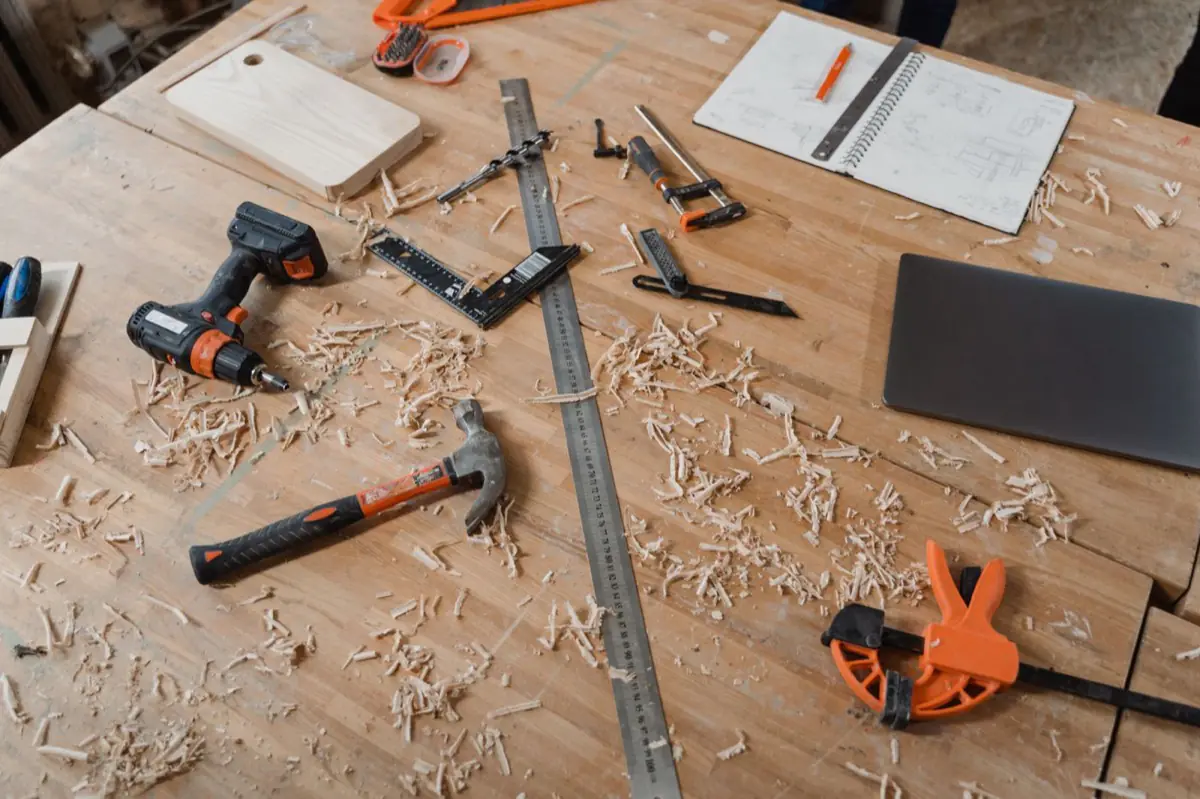 Photo: Pexels
Getting usable photos without a photographer
- Shoot the same angle three times. Before, halfway, finished. The set is worth more than any single shot.
- Turn every light on and open the blinds. Phone cameras are good now. They are still bad in the dark.
- Get the whole room, then one detail. Wide for context, close for craft. Two photos per space is enough.
- Clear the tools out of the finished shot. The mess is only interesting in the during photo.
- Ask before photographing somebody's home. A one line text is enough, and it saves an awkward conversation later.
The three things buyers check before calling
Hiring a contractor is a high anxiety purchase. People are handing over money and access to their home to somebody they have never met, and they are looking for reasons to feel safe.
- Insurance and licensing, stated plainly. Say what you hold. Do not claim anything you cannot produce on request.
- How you quote and charge. Free quote or not, deposit or not, staged payments or one bill. Silence here reads as something to hide.
- Whether you have done their kind of job. Which is why projects beat galleries. They are checking for their own house, not your best work.
What actually turns a visitor into an enquiry
Two things. A form short enough to fill in on a phone, and a clear statement of what happens next.
Name, phone, town and a box for what the job is. That is four fields, and every extra one loses people. Under the button, say what happens: a call back within a day, a visit to quote, whatever is true for you. Contractors lose more enquiries to uncertainty about the next step than to price.
What a contractor website should cost
Home, projects, services, about and contact is five pages and covers most contractors. That is $449 at my prices, with every word written for you and the technical SEO included.
If you work across two very different types of client, domestic and commercial for example, that is worth a sixth page rather than one page trying to talk to both. What each tier covers is set out on the what every build includes page.
Saying something about price without quoting the job
Contractors hate publishing prices, for a good reason: no two jobs are the same and a number out of context loses work. But silence loses more, because the visitor assumes the worst and calls somebody who gave them something to hold on to.
You do not have to publish a price list. You have to remove the uncertainty. A typical range for a common job, a minimum job size, or an explanation of how you quote all do the work. Something as plain as most kitchens we do land between these two numbers, depending on what the space needs, filters out the people who were never going to hire you and reassures the ones who were.
Timelines, and the anxiety nobody writes about
For work inside somebody's home, disruption worries people more than cost. How many days, will there be dust everywhere, can they use the kitchen, will somebody be there at eight every morning or turn up when they feel like it.
Answer that on the site, in plain language, before anybody asks. It costs you nothing, and it separates you from every competitor whose site is a gallery and a phone number. It also filters out the jobs you do not want, because somebody who cannot live with a two week timeline finds out now rather than in week one.
Licensing and insurance, once, clearly
State what you hold, in one line, near the top of the page. Do not claim anything you cannot produce on request, and do not use a badge graphic that implies a certification you do not have. If you are bonded and insured, say it plainly. Homeowners are checking for exactly this and most contractor sites bury it in the footer or leave it out.
Reviews, and what to do when you have none
If you have reviews, quote them with a first name and a town, and link to wherever they live so anybody can check. Three real ones beat a wall of anonymous praise.
If you have none yet, do not invent any, and do not use a star graphic. Say how long you have been working and show the work instead. Then ask your last three customers for a review by text this week. A short honest site with two reviews outperforms a polished one with a fabricated wall of them, and the fabricated version is the one that ends badly.
What to do when the work is not photogenic
Not every trade produces a beautiful finished photograph. Roofing looks like a roof. Drainage, insulation, foundations and rewiring all look like a hole in something, and the best possible outcome is that nobody can tell you were there.
When that is the job, sell the process rather than the result. Photograph the mess before, the work in progress, the site left clean at the end. Show the equipment and the crew. Take a picture of the paperwork, the certificate, the tidy job. What you are proving is competence and care, not beauty, and those are visible in the middle of a job even when they are invisible at the end.
The before and during shots also solve the credibility problem that finished photographs have, which is that anybody can find a nice picture of a finished roof. Nobody else has a photograph of your crew on that roof.
Decide who the site is talking to
A contractor site that tries to speak to homeowners, architects, developers and subcontractors at once ends up speaking clearly to none of them. They want different things and they are reassured by different proof.
Pick the client you want more of and write the homepage for that person. Homeowners want to know you will be careful, tidy and predictable in their house. Developers and builders want capacity, scheduling and whether you can run your own crew. If you genuinely serve both, give the second one its own page rather than diluting the first.
What to take away
- Six told projects beat a hundred photos. Story, problem, fix, duration, three images. That is the whole format.
- Answer disruption, not just price. How long it takes worries buyers more than what it costs.
- Four form fields and a promise. Say what happens after they press send, and make sure the form still works.
Questions people actually ask
What should a contractor's website include?
A handful of projects told properly rather than a photo gallery, plain statements about insurance and how you quote, a short contact form, and photographs of your own finished work.
How many photos should I put on my site?
Fewer than you think. Three or four per project, chosen to show before, during and finished, beat a gallery of everything you have ever built.
How much does a contractor website cost?
Most contractors need about five pages, which is $449 at my prices, including all the copywriting and technical SEO, live in seven days.
Do I need separate pages for domestic and commercial work?
If both are a real part of your business, yes. They are different buyers asking different questions, and one page written for both usually convinces neither.
Should I put prices on a contractor website?
You do not need a price list, but you do need to remove the uncertainty. A typical range, a minimum job size, or an explanation of how you quote will keep more enquiries than silence.

Danny Ruiz
I build small business websites on my own. The design, the copy, the SEO and the hosting setup, all of it. One person, fixed prices, live in seven days.
Read next
Trades
Web Design for Plumbers That Gets You the Call
The thirty second version of your site that decides whether the phone rings.
8 min read
Trades
Web Design for HVAC Companies Built for 2am Calls
One site, two very different buyers, and the layout that serves both.
8 min read

Pricing
What the Average Cost of Website Design Actually Buys You
What each price band gets you, and where the money actually goes.
8 min read